


9 Stellar Homes That Venture Off-Grid
Celebrate Earth Day with these off-grid homes that put sustainability first.
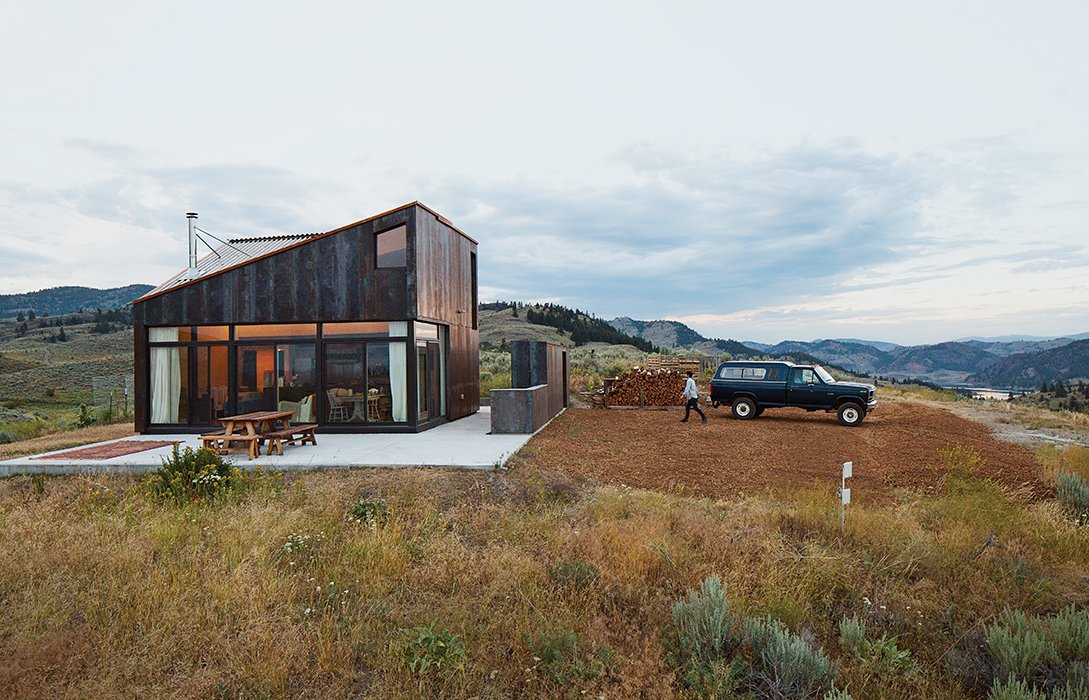
Once upon a time, the idea of an off-grid home might’ve conjured visions of Little House on the Prairie, but no longer. The interest in living off-grid—i.e. in a self-sufficient manner without reliance on public utilities like municipal water supplies, the electrical power grid, or the local sewer and gas systems—has only risen as a cheaper, more eco-friendly, and more independent way of living.
Homes that are off-the-grid usually allow for a lower carbon footprint, lower (or even nonexistent) utility bills, and a sense of freedom and self-reliance. In celebration of Earth Day, we’ve gathered up some of our favorite modern homes that are partially, if not completely, off the grid.
A Writer’s Island Cabin Off the Coast of Maine
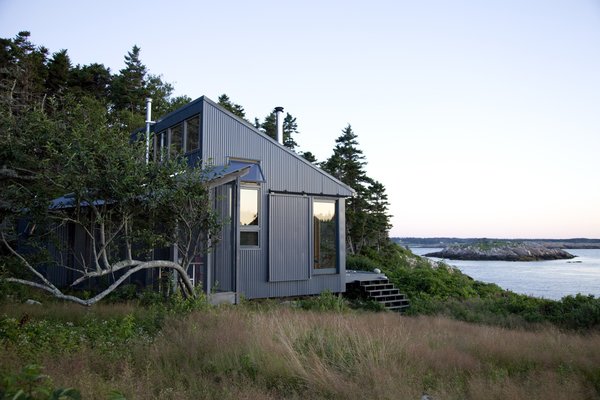
On an island 20 miles off the coast of Maine, a writer, with the help of his daughter, built not only a room, but an entire green getaway of his own.
Photo: Erik Johnson
On an island off the coast of Maine in a small town where personal generators are the norm, the Porters instead sought out more eco-friendly heating and electrical sources with solar panels and an on-demand water heater. The home, designed by the client’s daughter, Alex Scott Porter, featured an unobtrusive exterior that sought to blend in with the local vernacular in color and form but was still distinctly modern and not the traditional Maine farmhouse or barn.
A Tasmanian Prefab With Rain Water Harvesting and Solar Water Heaters

Upon his first visit to Tasmania, an island south of the Australian mainland, resident David Burns was immediately smitten with its varied, pristine landscape. Working with architecture firm Misho+Associates, he built a self-sustaining, 818-square-foot retreat that would allow him to completely unplug from urban life.
Photo: Lucas Allen
With clients working in environmental science and sustainability, an eco-friendly house seemed like a natural fit to architect Misho Vasiljevich of Misho+Associates. In fact, the Sydney–based firm specializes in energy conservation, and designed the orange home in Tasmania as a "box within a box," with a protective outer layer system of screens and an extremely high r-value of insulation for the inner box. The home is connected to the electrical grid, but it uses an evacuated solar-tube system to minimize its energy consumption for water heating; it also harvests rain water and uses a gray and black water system, as well as recyclable materials like timber and zinc for the exterior.
A Rural Vacation Home Clad in Weathered Steel Panels
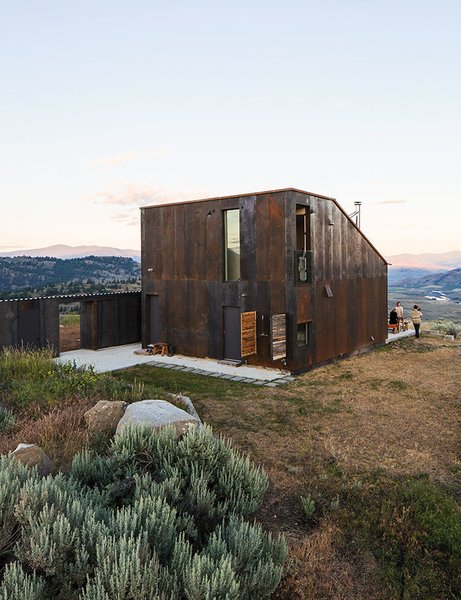
Architect Jesse Garlick’s rural Washington vacation home references its rugged surroundings. The steel cladding has developed a patina similar to the ochre-red color of bedrock found in the area.
Photo: The Morrisons
See the full story on Dwell.com: 9 Stellar Homes That Venture Off-Grid


