


8 Black Designers Whose Socially Impactful Work Challenges the Status Quo
Wielding design as a tool for empowering underserved communities, these visionary Black architects and designers are paving the way for a more ethical future.
Places convey whether they are designed for us or not in often subtle ways. Cultural values lurk behind aesthetic choices, and small details signal inclusion or exclusion—both in the development process and the ultimate design. We spoke with eight Black designers whose work manifests social impact, both on a large scale—addressing deep-rooted sources of system injustice—and on a more intimate scale—creating interiors that cause a psychological shift.
Deanna Van Buren

Deanna Van Buren is cofounder of the Oakland, California-based Designing Justice + Designing Spaces.
Photo courtesy of Designing Justice + Designing Spaces
Deanna Van Buren is cofounder of the Oakland, California–based Designing Justice + Designing Spaces (DJDS), a nonprofit architecture and real estate development firm established to work with incarcerated and formerly incarcerated communities to realize projects that embody the principle of restorative justice: holding people accountable for their actions and addressing the needs of survivors as a primary way of repairing the harm.
"I saw the public interest design movement had emerged," Van Buren says. "I was living overseas for a long time, came back to California, and saw groups like Public Architecture, Architecture for Humanity, and was like, ‘Oh, we can serve others besides rich developers and institutions!"
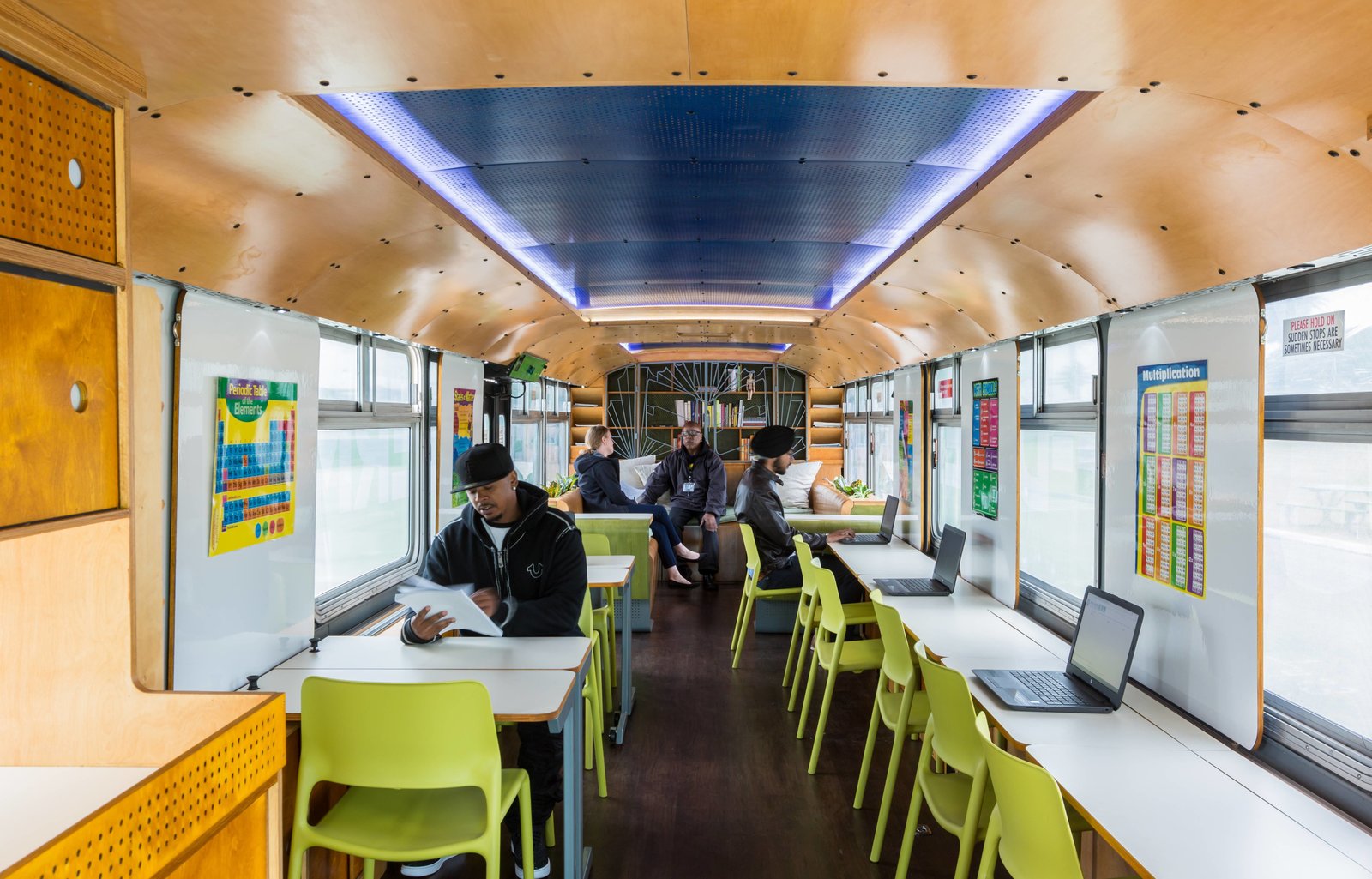
The Five Keys Mobile Classroom by Designing Justice + Designing Spaces repurposed a public bus in Oakland as a mobile schoolhouse installed with a classroom, books, and computers with Wi-Fi access.
Courtesy Designing Justice + Designing Spaces
DJDS has branched out to address the larger implications of the criminal justice system, too, such as lack of economic opportunity, reentry into the community and recidivism, and closed-down jail infrastructure. But Van Buren emphasizes that at its core, the work is about producing good quality design.
"Of course, everybody’s personal experience plays into what they do," she says. "I would rather address the huge inequities of the patriarchy and white supremacy. I would hope everybody would be working towards that, but in my own personal experience, I have a bit more motivation to address that as a designer and an architect."
Emmanuel Pratt
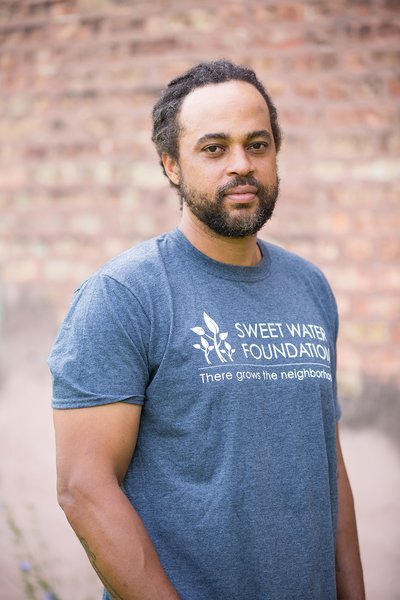
Emmanuel Pratt founded Sweet Water Foundation in Chicago to pioneer a regenerative approach to repurposing vacant spaces.
John D. & Catherine T. MacArthur Foundation
See the full story on Dwell.com: 8 Black Designers Whose Socially Impactful Work Challenges the Status Quo
Related stories:


