


Breathe Easy With These Tried-and-True Solutions for Indoor Air Pollution
It’s a global crisis, but there are ways to protect yourself.
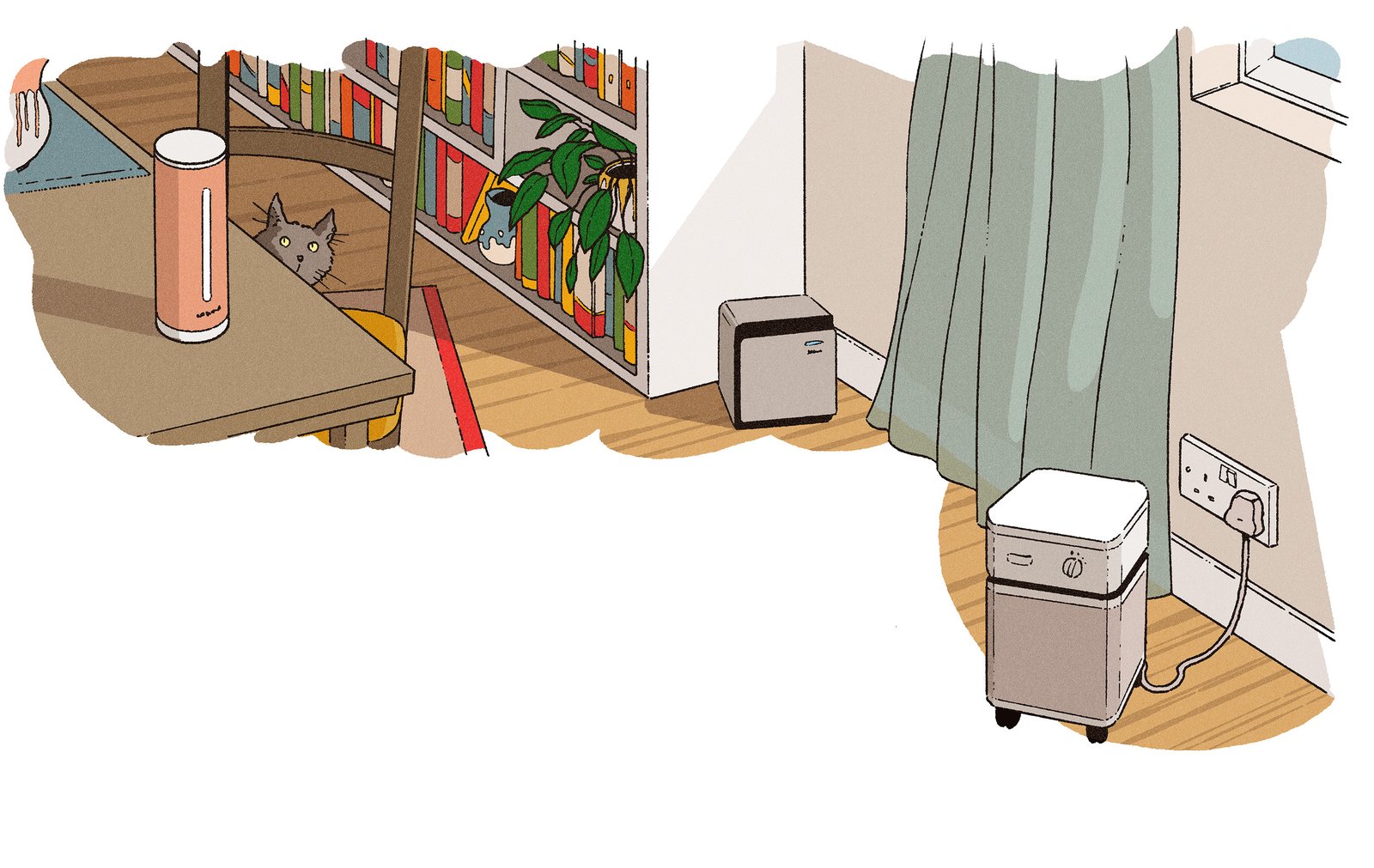
The air in our homes is killing us. The World Health Organization calls household air pollution the "largest single environmental health risk" in the world today, causing the death of nearly 4 million people around the globe every year.
"The health effects of indoor air pollution include getting sick from respiratory and cardiovascular diseases and potentially dying prematurely," says Shelly Miller, professor of mechanical engineering at the University of Colorado Boulder.
In fact, indoor air can be up to five times worse than what’s outside. It’s thick with dust, pollen, mold, pet dander, and so on. "People think they breathe better inside," says Richard Miller, CEO of biotechnology company BetterAir Environments. "It’s actually more detrimental to breathe indoors."
The solution? Start by opening windows more often and doing a bit of indoor gardening. NASA studies indicate that roughly two houseplants per 100 square feet of space can help substantially. Next, consider getting an air purifier.
Using high-efficiency particulate air (HEPA) filtration technology to trap particulates as small as 0.1 micrometers, air purifiers are a possible solution. "There’s overwhelming testimony from owners who say their troubles with asthma or allergies improved after they started using one," says Tim Heffernan, a senior writer at Wirecutter, which spent seven years testing various models.
But that’s only half the story. Volatile organic compounds (VOCs), prevalent and powerful chemical irritants, escape most air filters. "They’re found in household products, like furnishings and paints, and can be off-gassing into the home," says Professor Miller. "Many of these chemicals are endocrine disruptors, and a lot of them are cancer-causing."
With heightened consumer awareness of VOCs and other pollutants, many companies are trying to upgrade their purification products. The reviews are mixed. "There’s a lot of marketing on the part of basically every manufacturer implying they’ve reinvented the wheel," says Heffernan. "From what we know, we’re pretty skeptical about those claims."
One area of innovation looks at dispensing with filters in favor of physically destroying pollutants at the micro level. A new technology employed by BetterAir Environments involves using good bacteria to kill their bad aerial counterparts. BetterAir’s Biotica 800 disperses a patented probiotic mist to eliminate harmful elements that settle onto surfaces.
Another approach is physically changing the makeup of products that traditionally bring VOCs into our homes, such as paints. For instance, a company called Smog Armor developed a paint containing "enhanced natural active minerals." Once dried, the minerals constantly attract and eliminate VOCs, formaldehyde, and CO2.
While the research is still out on the efficacy of these new technologies, it’s not too soon to take control of the air at home. One place to start is with a smart Indoor Air Quality (IAQ) monitor that sends alerts to a smartphone. This type of connected monitor is proactive, turning on a smart ceiling fan or purifier powered by a smart plug.
"Monitoring your air quality is really helpful for behavioral information," says Shelly Miller. They say that knowing is half the battle. It’s time to make sure you’re breathing better air.
Everything You Need to Clear the Air
The Netatmo Smart Indoor Air Quality Monitor measures CO2 levels to gauge indoor air quality. It uses the Healthy Home Coach app to track air pollution, humidity, noise, and temperature.
- Samsung’s AX 9500 Cube is practically silent as it captures 99.97 percent of ultra-fine particles. The Cube’s portable, modular design means that it’s stackable for larger rooms.
- IKEA’s Gunrid sunlight-activated curtains use a new, mineral-based textile treatment to capture and break down pollutants. The curtains will be available for purchase this year.
- The Austin Air HealthMate HM400 is a no-frills, minimal-maintenance air purifier that can remove allergens, particles, and VOCs in rooms measuring up to 938 square feet.


